William Harvey returns to the Dorchester Library

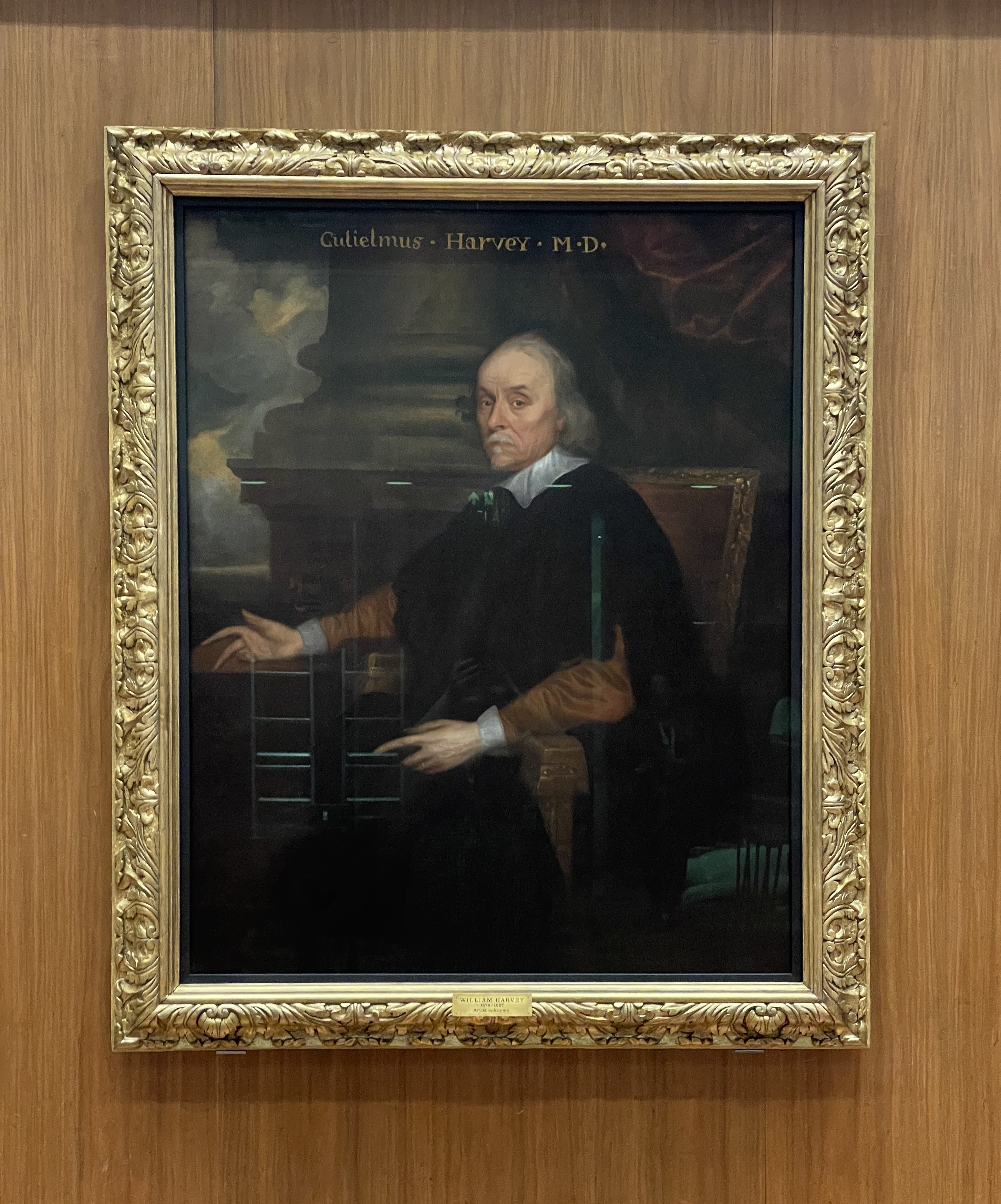
The RCP’s portrait of famous physician William Harvey (1578-1657) has returned to pride of place in the Dorchester Library following careful frame conservation and reglazing. 

William Harvey portrait on the wall of the book-lined Dorchester Library

William Harvey & his portrait

An anatomist and physician, William Harvey lived through an extraordinary age of scientific revolution, to which he would contribute with his own revolutionary discovery on the heart and blood circulation.

In 1628, after 10 years of research, Harvey at last published his discovery in a book: De motu cordis. His research revealed that blood was not ‘concocted in the liver’, but circulated from the heart, going against over 1000 years of medical theory and practice. In doing so he changed the conception of physiology, and life itself, forever. 

His legacy of curiosity, research and discovery has had a lasting impact on the practice and science of medicine.  The discoveries led to the birth of many medical disciplines, from cardiology to modern haematology.

His portrait was painted, framed and given to the college around the 1650s but we don’t know who the artist was or who donated it to us. We do know it was one of very few items from the College that survived the 1666 Great Fire of London. It has been cared for in our collection ever since and has hung in the libraries of both our previous and current homes.  

Portrait of Grace Pierrepont a white woman with dark curled hair in a rich red and dark blue dress. The painting is hung on a wood wall with book filled shelves either side.

Making way for Lady Grace

In August 2025 it was taken off display while the portrait of Lady Grace Pierrepont was hung in its place on loan from her family estate. The loan coincided with our ‘Body of knowledge’ exhibition celebrating the Heritage Library to which Lady Grace gave the largest ever donation of books to the RCP in 1678.  

Conservation opportunity

With the painting off display for a significant period we took the opportunity to assess the condition of the portrait's frame and provide conservation treatment. The work was undertaken by ICON accredited Conservator-Restorer Annie Ablett who has worked with our collections for many years. 

First the painting was removed from the frame and carefully stored on site while the frame went to the studio for further assessment and work.

Three images: left shows art handlers unscrewing the frame of the painting, centre the Harvey painting removed from the frame, right the empty frame being moved
Close up of the damaged gilding showing the previous layers.

The structure of the frame, while historically delicate, has had previous treatments and was showing no new structural issues. The reverse was, however, given a careful clean as our central London location means we do see a build up of urban, polluted dirt. 

The main work was to the finish on the face of the frame which was in very poor condition. The frame itself is made of pine wood with carved pine decorations that have been gilded. 

The carvings are intact and stable but the gilded surface is fragile and prone to natural deterioration and loss. 

The assessment revealed that there had been at least two regilds over the centuries the latest in the 19th century. In some areas there is evidence of the original finish: gold leaf applied to a shellac surface. This is a specific 17th century innovation that was fairly short lived and rarely seen today.

Two images showing close up of the corner of the frame, left before and right after conservation.
Before and after conservation

The topmost gilded finish had also suffered from the central London urban pollution and the fragile upper layers of oil and water gilding had suffered damage. The conservator carefully cleaned the gilding, consolidated and sealed areas of instability, infilled some areas of loss, added a fine protective film and in-painted in small areas to improve the aesthetic.

Returned to display 

It was then brought back to the RCP to be reframed and new glazing with UV filter, laminated, low-reflect glass was added.

Three images: left the shows new glazing being inserted into the frame, centre shows the art handlers putting the painting into the frame, right the painting being rehung.
Painting of William Harvey a white man in black robes with grey hair and small pointed beard. The painting is framed in a gold gilded and carved frame.

Today the painting has been rehung in the Dorchester Library for visitors and users of the RCP spaces to enjoy. So next time you stop by take a moment to admire the frame!

Gail Chapman

Public programmes officer

Date

Read our weekly library, archive and museum blog to learn more about the RCP’s collections, and follow us on BlueSky, Instagram and Facebook.


Library, Archive and Museum