
Image Gallery


Painted in blue with a cartouche inscribed ‘V AEGIPTIACV / IB / 1679’, this jar was made in Lambeth, London. It was initialled ‘IB’ and dated 1679 for the original owner, John Battersby, who was Samuel Pepys’s apothecary.
This jar is one of a collection of 183 apothecary (chemists’) jars, which were used to store medicines and their ingredients, dating from the 1640s to 1745. Collected by Professor Victor Hoffbrand, a Royal College of Physicians (RCP) fellow, it is the largest privately owned collection of English delftware apothecary jars in the country. The collection is currently on display at the RCP.


This ceremonial item was presented to the College by John Lawson (1632–1705) in 1683. The style of the College mace follows the same design as the Commonwealth mace that was ordered by Oliver Cromwell for use in the House of Commons. The College mace was made by Anthony Nelme in 1683.
This ceremonial item was presented to the College by John Lawson (1632–1705) in 1683. The style of the College mace follows the same design as the Commonwealth mace that was ordered by Oliver Cromwell for use in the House of Commons. The College mace was made by Anthony Nelme in 1683.


Henry Pierrepont donated his library of books on medicine, law and botany to the College in 1680, to replace the library that was lost in the Great Fire of 1666. Pierrepont was made the first honorary fellow of the College.
Henry Pierrepont donated his library of books on medicine, law and botany to the College in 1680, to replace the library that was lost in the Great Fire of 1666. Pierrepont was made the first honorary fellow of the College.


Antimony is a highly toxic metallic element that, when ingested, produces symptoms that are similar to arsenic poisoning. In the 17th century, illness was thought to be caused by an imbalance of ‘humours’ in the body, so violent purges were a common medical treatment. When wine was drunk from a cup that was made from antimony, it would cause an unfortunate patient to vomit. This antimony cup was presented to the College by Mr Gundry, the husband of a descendant of Baldwin Hamey (junior). The cup was used by Hamey and was reputedly bought in London, in Gunpowder Alley, at the sign of the Magpie in 1637 for 50 shillings.
Antimony is a highly toxic metallic element that, when ingested, produces symptoms that are similar to arsenic poisoning. In the 17th century, illness was thought to be caused by an imbalance of ‘humours’ in the body, so violent purges were a common medical treatment. When wine was drunk from a cup that was made from antimony, it would cause an unfortunate patient to vomit. This antimony cup was presented to the College by Mr Gundry, the husband of a descendant of Baldwin Hamey (junior). The cup was used by Hamey and was reputedly bought in London, in Gunpowder Alley, at the sign of the Magpie in 1637 for 50 shillings.
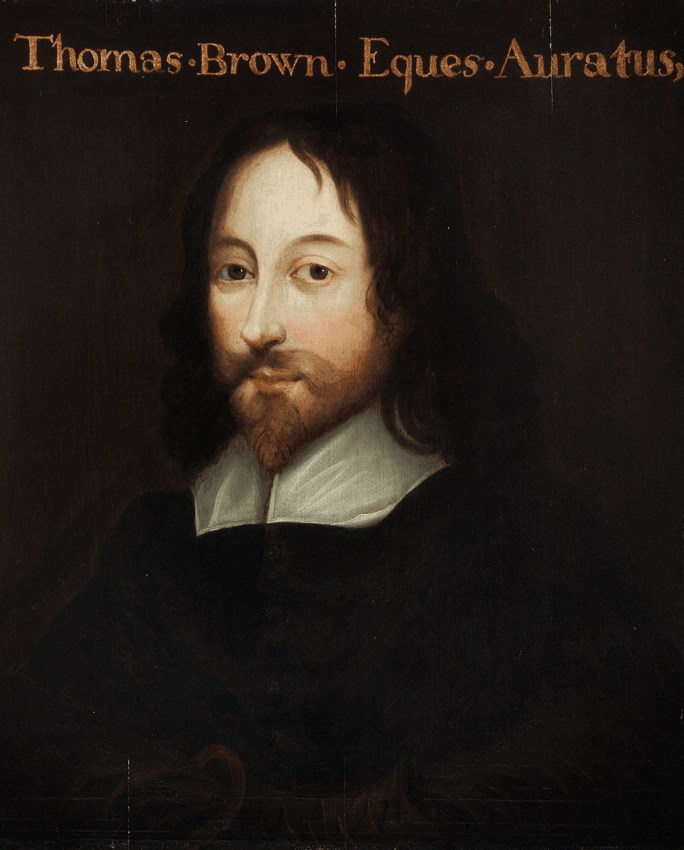

Browne was profoundly curious and he spent his life observing the world around him. He built a vast collection of artefacts, animal and plant samples, and books. He is best remembered for his literary works. Browne inspired many authors, including Virginia Woolf, Samuel Taylor Coleridge and Jorge Luis Borges. He also introduced over 700 words into the English language, including the first recorded uses of the words ‘medical’, ‘coma’, ‘hallucination’ and ‘insecurity’.
Browne was profoundly curious and he spent his life observing the world around him. He built a vast collection of artefacts, animal and plant samples, and books. He is best remembered for his literary works. Browne inspired many authors, including Virginia Woolf, Samuel Taylor Coleridge and Jorge Luis Borges. He also introduced over 700 words into the English language, including the first recorded uses of the words ‘medical’, ‘coma’, ‘hallucination’ and ‘insecurity’.


Made in Europe, this box was produced to hold a bezoar stone. This was a stone that was produced in the kidneys of an Indian antelope. These stones were supposed to have been formed from the poison of serpents that had bitten the animal, which then combined with the matter that was produced to counteract the poison. From the Middle Ages onwards, people strongly believed that a bezoar was a potent charm against plague and poison. In fact many quadrupeds produce such stones, which are composed of indigestible material in their intestines.
Made in Europe, this box was produced to hold a bezoar stone. This was a stone that was produced in the kidneys of an Indian antelope. These stones were supposed to have been formed from the poison of serpents that had bitten the animal, which then combined with the matter that was produced to counteract the poison. From the Middle Ages onwards, people strongly believed that a bezoar was a potent charm against plague and poison. In fact many quadrupeds produce such stones, which are composed of indigestible material in their intestines.


This is the first book that was printed in the English language. The text (an account of the Trojan Wars) was translated and printed by William Caxton (1422–1491/2). After learning the craft of printing in the Low Countries, Caxton moved to Westminster and set up England’s first printing press. This book was given to the College in 1680, as part of the library of Henry Pierrepont, Marquis of Dorchester (1606–1680).
This is the first book that was printed in the English language. The text (an account of the Trojan Wars) was translated and printed by William Caxton (1422–1491/2). After learning the craft of printing in the Low Countries, Caxton moved to Westminster and set up England’s first printing press. This book was given to the College in 1680, as part of the library of Henry Pierrepont, Marquis of Dorchester (1606–1680).


The Prujean chest of surgical instruments contains 56 instruments that were used for obstetrics, gynaecology, lithotomy, trepanation, dentistry, amputation and bullet extraction. It was presented to the College by Thomas Prujean (?–1662), the son of Sir Francis Prujean (?–1666), in 1653.
The Prujean chest of surgical instruments contains 56 instruments that were used for obstetrics, gynaecology, lithotomy, trepanation, dentistry, amputation and bullet extraction. It was presented to the College by Thomas Prujean (?–1662), the son of Sir Francis Prujean (?–1666), in 1653.